
Sourced answers on contested news
Reading past the headline, straight to the paper trail.
A viral news story tends to outrun its paper trail. The heated version circulates. The eventual DOJ filing, certified election result, or agency investigation usually doesn’t. This site is a small reference catalogue for a handful of those stories, each page summarises what the official record shows, in plain prose, with every claim linked back to the primary document.
No editorial line, no advocacy, no outrage economy. Topics are chosen because they produced lasting misinformation worth correcting, not for traffic. New topics get added as they become relevant.
A NOTE ON THIS DOMAIN
This domain changed hands, and nothing on the current site is connected to the content or authorship that appeared here before. The focus now is narrow and sourced: standing references on events that often circulate in distorted form and a running media-literacy section. Every claim links to a primary document or a peer-reviewed source. No advocacy, no editorial line, no outrage economy.

Start here
Each topic page answers a specific question and links straight to the official record.
- January 6, 2021, at the U.S. Capitol – what DOJ filings and the House Select Committee report show, including the identification of the officer who fired the fatal shot inside the building, and which names circulated online that were never supported by evidence.
- COVID-19 vaccine safety data – how post-authorization surveillance works, what VAERS data represents, and where the peer-reviewed safety record lives.
- COVID-19 public-health policy in North America – the actual statutes, executive orders, and travel rules in the U.S. and Canada, by jurisdiction, with citations.
- Global public-health organizations at a glance – WHO, the Gates Foundation, GAVI, CEPI, and the WEF – links to each organisation’s mandate and audited financials.
- The 2021 GameStop market event – the short squeeze, the Robinhood halt, and what the SEC, the House, and the courts concluded.
- U.S. elections administration – how ballots are certified and audited, the Maricopa review, and the 2025–2026 court rulings.
- Spotting online misinformation – SIFT, lateral reading, reverse-image search, and the patterns behind most viral hoaxes.
How to tell if a claim holds up
Most of what spreads fastest online spreads because it produces a strong emotional reaction, outrage, fear, or vindication, before anyone has time to ask whether it’s true. The fastest corrective is a method developed by Mike Caulfield, a digital literacy researcher at the University of Washington’s Center for an Informed Public. He calls it SIFT, and it’s four moves that take under a minute:
- Stop. Before reading on, sharing, or quoting, pause. The stronger the pull, the more the pause matters.
- Investigate the source. Open a new tab. Look the publication up in Wikipedia, in Media Bias/Fact Check, or in reporting elsewhere. Don’t rely on the site’s own About page. This is called lateral reading, and it’s how professional fact-checkers actually work.
- Find better coverage. If the claim is real, outlets with stronger reputations will have it. If it only appears on partisan aggregators or newly registered domains, that’s itself a signal.
- Trace claims, quotes, and media back to the original context. A photo, a pulled quote, or a ten-second video clipped out of a longer exchange can mean the opposite of what a repost implies. Reverse-image search and direct links to primary documents usually resolve it in seconds.
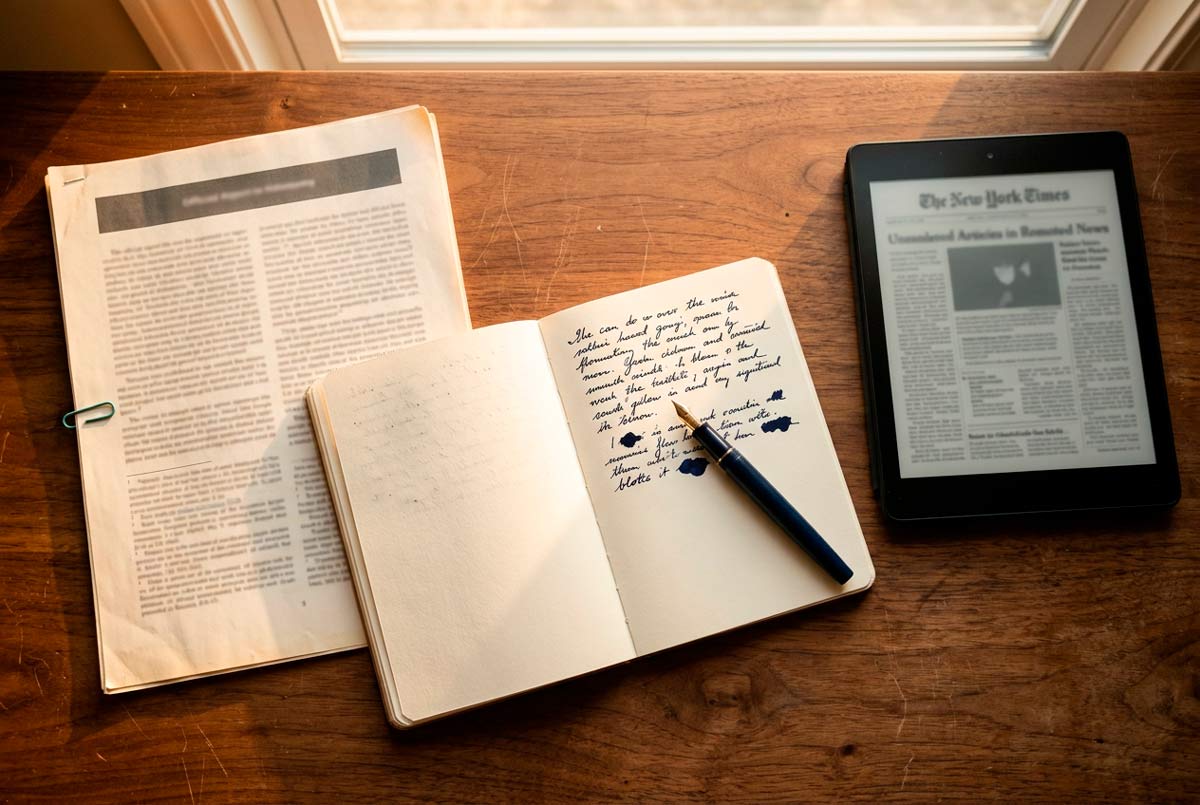
None of this is foolproof. It raises the cost of being fooled, which is the realistic goal – most casual misinformation doesn’t survive the first two moves. For identifying misinformation in the wild, the method matters far more than any single checklist of red flags.
Who’s still doing the checking
The landscape shifted in January 2025, when Meta ended its third-party fact-checking program in the United States and replaced it with a Community Notes system similar to the one on X. Meta’s own Oversight Board ruled in March 2026 that Community Notes alone aren’t an adequate substitute, particularly during elections and in regions under crisis or repressive conditions. Most established fact-checkers kept operating independently, and the Poynter Institute’s 2025 State of the Fact-Checkers Report counted 141 active organisations across 71 countries.
Widely cited outlets include Snopes (the oldest in the field, broad remit), PolitiFact at Poynter (rates U.S. political claims on a six-point scale), Lead Stories (focused on viral false claims on social media), FactCheck.org at the Annenberg Public Policy Center, Truth or Fiction, AP Fact Check, and Reuters Fact Check. Google’s Fact Check Explorer aggregates verdicts from dozens of these outlets in a single search interface.
Reading two or three independent sources that reach the same conclusion is almost always more useful for news verification than trusting any single one.
Straight to the documents
Where possible, the topic pages skip commentary and point at the official record directly:
- justice.gov – DOJ filings and press releases, including the Capitol Breach cases database
- cdc.gov, fda.gov, vaers.hhs.gov, ema.europa.eu – post-authorization vaccine safety surveillance
- federalregister.gov – U.S. executive orders and final agency rules
- canada.ca/en/public-health – Public Health Agency of Canada
- sec.gov and eac.gov – SEC filings and the Election Assistance Commission
- fbi.gov – press releases on federal investigations

FURTHER READING ON NEWS LITERACY
A few organisations worth knowing if any of this is new. The News Literacy Project is a U.S. nonprofit that teaches news literacy in schools. Its free classroom tool Checkology reached roughly 575,000 students across 4,800 districts in 2025. “How to Spot Fake News” is a concise infographic from the International Federation of Library Associations, translated into more than three dozen languages. And the International Fact-Checking Network at the Poynter Institute is the main certifying body for fact-checking organisations worldwide.
This reference is informational only. It is not affiliated with any government, medical, legal, or institutional body, and has no connection to content formerly hosted on this domain. Nothing here should be treated as legal, medical, or financial advice.