
From the January 2021 short squeeze to T+1 settlement, FINRA sanctions, and the 2024 resurgence.
A NOTE ON WHAT THIS PAGE IS
This page is educational and informational. It is not investment advice, it does not recommend buying or selling any security, and it does not evaluate the merits of GameStop Corp. as an investment. It summarises official findings about the January 2021 market event. For investment decisions, consult a licensed professional.
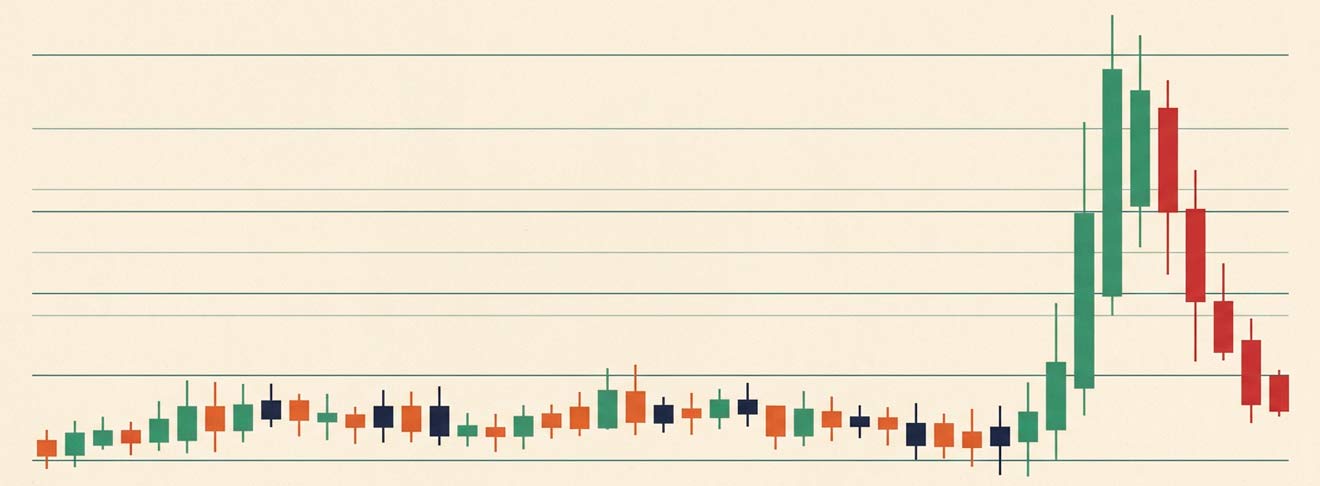
The January 2021 GameStop episode drew regulatory, congressional, and academic attention, and it reshaped parts of U.S. market structure. Between January 13 and January 29, 2021, the share price of GameStop Corp. (NYSE: GME) moved sharply; on January 28, several retail brokerages, most prominently Robinhood, restricted buying of GameStop and a small set of other securities.
Two official investigations followed: the SEC Staff Report in October 2021, and the House Financial Services Committee’s majority-staff report in June 2022. Here we summarise what those reports found, what courts have since concluded about related lawsuits, what rules changed as a result, and how the new regime handled the 2024 resurgence.
AT A GLANCE
Peak price: $483 intraday (Jan. 28, 2021); close of $347.51 on Jan. 27
Short interest: approximately 140% of public float heading into the squeeze
NSCC collateral request to Robinhood (Jan. 28, 5:11 a.m. ET): about $3 billion; Robinhood had roughly $696 million on deposit
DTCC relief that day: $9.7 billion in Excess Capital Premium charges waived across members
SEC Staff Report: Oct. 18, 2021 (45 pages). Found no “gamma squeeze” and concluded positive sentiment, not short-covering, drove the sustained appreciation
HFSC “Game Stopped” report: June 24, 2022 (138 pages; 16-month investigation)
SEC response (T+1 settlement): rule adopted Feb. 15, 2023; compliance May 28, 2024
Background – short interest and “meme stocks”
GameStop is a brick-and-mortar video-game retailer whose stock had traded below $5 for much of 2020 as its business model faced pandemic and digital-distribution pressures. Through late 2020 and into January 2021, short interest in GME rose to a reported 140% of the public float, a level that can occur because lent shares can themselves be re-lent.
At the same time, discussion accelerated on the Reddit forum r/WallStreetBets and on YouTube, where Keith Gill (using the handles “DeepFingValue” and “Roaring Kitty”) had publicly held a long position since 2019. A small cluster of similarly situated “meme stocks”, including AMC Entertainment, BlackBerry, and Bed Bath & Beyond, experienced related volume and price movement in the same window.
The squeeze (Jan. 22–27) and the restriction (Jan. 28)
THE PRICE RUN
- Jan. 13, 2021 – GME closes near $31.
- Jan. 22 – GME closes at $65.01; trading volume surges.
- Jan. 27 – GME closes at $347.51; a reported 140% short interest draws mainstream media coverage.
- Jan. 28 (intraday) – GME reaches an intraday high of approximately $483 before several brokerages restrict buying.
THE ROBINHOOD RESTRICTION
- Jan. 28, 5:11 a.m. ET – The National Securities Clearing Corporation (NSCC), DTCC’s equities clearinghouse, emails Robinhood Securities a deposit requirement of approximately $3 billion – a roughly $1.3 billion VaR charge plus a $2.2 billion Excess Capital Premium. Robinhood has approximately $696 million on deposit.
- Jan. 28, morning – Robinhood restricts opening new positions in GameStop and a dozen other securities; existing positions can still be sold. Several other retail brokerages impose varying restrictions on the same names.
- Jan. 28 – DTCC waives $9.7 billion in Excess Capital Premium charges across all clearing members, citing systemic-risk considerations. The waiver is granted without a written policy, a point the House Financial Services Committee later flags.
- Jan. 28–30 – Robinhood raises $3.4 billion in emergency capital from investors to shore up its clearing deposits and resume buy-side trading.
How clearing deposits actually work
In 2021, U.S. equity trades settled two business days after execution (T+2). Between execution and settlement, the clearinghouse (NSCC at DTCC) sat between the buy-side and sell-side brokerages, guaranteeing completion even if one side defaulted. To absorb that risk, NSCC required each clearing member to post collateral scaled to its positions, including a Value-at-Risk (VaR) margin based on statistical volatility, plus an Excess Capital Premium triggered when a member’s VaR charge exceeded a threshold tied to its excess net capital.
When GME’s realised volatility spiked and customer positions concentrated in a handful of names, the formulas produced very large collateral calls. A retail broker that had allowed unlimited buying of high-volatility names faced a choice: find the cash, restrict the trades, or risk breaching NSCC rules. The mechanics are laid out in the SEC Staff Report, pages 14–22.
The SEC Staff Report (October 18, 2021)
The Staff Report on Equity and Options Market Structure Conditions in Early 2021 runs to 45 pages and was published by staff — not by the Commission, which did not formally adopt its conclusions. Four points are widely cited:
- On the cause of the price move: staff concluded that sustained positive sentiment among individual investors, rather than short-covering, drove the weeks-long price appreciation. The buying pressure came substantially from retail order flow.
- On a “gamma squeeze”: staff did not find that options-market dynamics, market makers hedging short call positions by buying the underlying, caused the price run. An Ad Hoc Academic Committee disputed this conclusion in a February 2022 paper, arguing that options hedging and short-covering contributed more than the staff estimated. The dispute is about quantification, not about whether any securities laws were broken.
- On broker restrictions: staff attributed them to clearing-deposit demands under the T+2 settlement regime, and recommended the Commission consider shortening the settlement cycle.
- On market manipulation: the report did not identify manipulation by any named party and did not recommend enforcement action.
The House Financial Services Committee report (June 24, 2022)
Under then-Chair Maxine Waters, the HFSC ran a 16-month investigation covering more than 50 witness interviews and 95,000 pages of documents. The Game Stopped majority-staff report runs to 138 pages. Its four principal findings:
- Troubling business practices. Robinhood’s rapid growth outpaced its risk-management infrastructure, including its capacity to post clearing collateral.
- Varied and uncoordinated restrictions. Restrictions imposed by different brokerages on Jan. 28 were not uniform, reflecting different clearing-deposit exposures rather than a coordinated plan.
- Lack of explicit contingency plans. Most firms examined had no documented plan for handling an extreme volatility event of this kind.
- The DTCC waiver. NSCC waived $9.7 billion in Excess Capital Premium charges without a written policy, raising transparency concerns.
The report did not conclude that Robinhood coordinated its restrictions with Citadel Securities or any other hedge fund. Committee staff reviewed the internal communications and testimony; the report explicitly records that witnesses stated no discussion of trading restrictions occurred on the Robinhood–Citadel call the evening of Jan. 27.
What the courts have decided
Dozens of private lawsuits were consolidated as In re January 2021 Short Squeeze Trading Litigation (1:21-md-02989, S.D. Fla.). Two tranches are relevant here:
- Breach-of-contract claims against Robinhood. The district court granted Robinhood’s motion to dismiss in January 2022. The Eleventh Circuit affirmed the dismissal in August 2023, holding that Robinhood’s customer agreement gave it the right to restrict trading in its own discretion.
- Antitrust claims against Robinhood and Citadel Securities. Plaintiffs alleged a conspiracy to restrict trading. The Eleventh Circuit affirmed dismissal in June 2024 (No. 22-11873), holding that plaintiffs failed to plead anticompetitive effects in a properly defined relevant market under Section 1 of the Sherman Act.
No court has found liability for market manipulation or antitrust violation arising from the Jan. 28 restriction. Separately, FINRA has sanctioned Robinhood twice: $70 million in June 2021 for March 2020 outages and unrelated supervisory failures, and $29.75 million in March 2025 for clearing-technology failures during the 2021 meme-stock period and separate anti-money-laundering lapses.

What changed in market rules afterwards
- Shortened settlement cycle (T+1). On Feb. 15, 2023, the SEC adopted amendments moving most broker-dealer transactions from T+2 to T+1 settlement. The compliance date was May 28, 2024. A shorter cycle reduces the window over which clearinghouses require collateral, lowering peak deposit requirements during volatility.
- Short-sale and securities-lending transparency. The SEC adopted Rule 13f-2 (short-position reporting by institutional managers) and Rule 10c-1a (securities-lending transaction reporting) in October 2023.
The 2024 resurgence
On May 12, 2024, Keith Gill posted to X for the first time in three years. GME opened at $26.34 the next morning, up 50.6% from the prior close. By May 14, the stock reached an intraday high of $64.83. On June 2, Gill disclosed a position on Reddit of 5 million shares and 120,000 call options. On June 11, GameStop raised $2.14 billion through an at-the-market equity offering at elevated prices.
A private investor lawsuit alleging pump-and-dump against Gill was filed and voluntarily dismissed within days in June 2024. No regulatory enforcement action has been brought as of this writing. The 2024 episode played out under the shorter T+1 settlement regime; no broker-wide trading restrictions occurred.
Questions people ask
No. The Staff Report did not identify market manipulation by any named party and did not recommend enforcement action. Staff concluded positive retail sentiment drove the sustained price appreciation.
No court or regulator has found that it did. The House Financial Services Committee’s June 2022 report, after reviewing 95,000 pages of documents and 50 interviews, recorded that witnesses stated trading restrictions were not discussed on the relevant Robinhood–Citadel call. The Eleventh Circuit dismissed the antitrust class action in June 2024 for failure to plead a relevant market.
Buy orders create new clearing obligations that require NSCC deposits. Sell orders reduce those obligations. Restricting the buy side lowered Robinhood’s collateral requirement to a level it could meet with existing capital plus emergency funding.
The settlement cycle is now T+1 (since May 28, 2024), which materially reduces peak clearing-deposit requirements during volatility. Short-position and securities-lending transparency rules were also adopted. A sufficiently large price move on a sufficiently concentrated book could still produce collateral calls that exceed a broker’s cash on hand.
A NOTE ON SOURCING
Every figure and finding on this page is drawn from the SEC Staff Report, the HFSC majority-staff report, Eleventh Circuit opinions, FINRA settlements, SEC rule-making documents, and wire-service reporting on those primary documents. Names of individuals and firms appear only where they are named in those official records. No motive is attributed to any party beyond what the reports and opinions themselves conclude.
This page is informational only and not investment, legal, or tax advice. Securities involve risk, including loss of principal. Consult a licensed professional before making investment decisions.